Facebook
 X
 Pinterest
 Copy Link
How Does Escrow Work in South Dakota: A Step-by-Step Guide for 2026

The escrow process in South Dakota is designed to protect both buyers and sellers by ensuring that funds and property are only exchanged when all conditions of the sale are met. Unlike some states where attorneys handle closings, South Dakota typically relies on title companies to manage escrow and facilitate the transaction. This guide explains how escrow works in South Dakota, what to expect at each stage, and how the process differs from other states.
What Is Escrow in Real Estate?
Escrow is a financial arrangement where a neutral third party—usually a title company in South Dakota—holds funds and documents on behalf of the buyer and seller until the transaction is complete. This ensures that neither party is at risk of losing money or property if the other fails to meet their obligations. In South Dakota, escrow is a standard part of most real estate transactions and is governed by state laws and the terms of the purchase agreement.
The South Dakota Escrow Process: Step by Step
Step 1: Opening Escrow
Escrow officially begins once the buyer and seller sign a purchase agreement. The buyer’s earnest money deposit is then placed into an escrow account held by the title company or another neutral party. In South Dakota, either the buyer’s agent, listing agent, or the title company can be responsible for managing the escrow account and ensuring that all funds are securely held until closing.
The purchase agreement will outline the terms of the sale, including the purchase price, closing date, and any contingencies that must be satisfied before the transaction can proceed. Both parties will receive a copy of the agreement, and the title company will begin the escrow process by opening an account and depositing the earnest money.
Step 2: Title Search and Examination
One of the first tasks the title company undertakes is a title search. This involves reviewing public records to confirm the property’s legal ownership and identify any liens, judgments, or easements that could affect the title. The title company will also check for unpaid property taxes, which can become the responsibility of the new owner if not addressed before closing.
In South Dakota, the title company is responsible for resolving any issues that arise during the title search. If problems are found, the seller may need to clear them before the sale can proceed, or the buyer may negotiate for the seller to address them as part of the closing process.
Step 3: Satisfying Contingencies
Most purchase agreements include contingencies that must be met before the sale can close. Common contingencies in South Dakota include:
Financing Contingency: The buyer’s mortgage application must be approved, and the lender must confirm that they are willing to finance the purchase at the agreed-upon terms.
Appraisal Contingency: The lender will order an appraisal to ensure the property’s value aligns with the purchase price. If the appraisal comes in low, the buyer may renegotiate the price or walk away from the deal.
Inspection Contingency: The buyer typically has the right to inspect the property for structural issues, pest problems, or other concerns. If significant issues are found, the buyer can request repairs, negotiate a price reduction, or terminate the contract.
Home Sale Contingency: If the buyer needs to sell their current home before purchasing the new one, this contingency allows them to back out of the contract if their home does not sell within a specified timeframe.
During this phase, the title company holds the earnest money in escrow. If any contingency is not met, the funds are returned to the buyer, and the contract is voided.
Step 4: Securing Financing
Once all contingencies are satisfied, the buyer’s lender will finalize the mortgage loan. The lender will provide a loan commitment letter, which confirms that the buyer is approved for financing and that the loan terms match those outlined in the purchase agreement. The lender will also work with the title company to ensure all necessary documents are prepared for closing.
Step 5: Final Walkthrough
Before closing, the buyer typically conducts a final walkthrough of the property to ensure it is in the agreed-upon condition. This is the buyer’s last opportunity to verify that any requested repairs have been completed and that the property is ready for transfer.
Step 6: Closing
On the closing date, all parties—buyer, seller, real estate agents, and the title company representative—gather to sign the final paperwork. The buyer will bring the remaining funds needed for the purchase, which are deposited into the escrow account. The title company will then:
- Pay off any existing liens or mortgages on the property.
- Distribute the seller’s proceeds.
- Record the new deed with the county, transferring ownership to the buyer.
- Disburse the earnest money toward the buyer’s down payment or closing costs.
Once all documents are signed and funds are disbursed, the title company releases the funds from escrow, and the transaction is complete.
How Long Does Escrow Take in South Dakota?
The escrow process in South Dakota typically takes between 30 and 45 days, though this can vary depending on the complexity of the transaction and the efficiency of the parties involved. Delays can occur if there are issues with the title search, financing, or contingencies. For example, if the appraisal comes in low or the inspection reveals significant problems, the process may be extended while the parties negotiate or resolve the issues.
Who Holds Escrow in South Dakota?
In South Dakota, title companies are the most common escrow holders. Unlike some states where attorneys handle real estate closings, South Dakota relies on title companies to manage escrow accounts, conduct title searches, and facilitate the closing process. This approach is designed to streamline the transaction and ensure that all legal and financial requirements are met before the sale is finalized.
The title company’s role includes:
- Holding the earnest money deposit in a secure escrow account.
- Conducting the title search and resolving any issues.
- Coordinating with the buyer’s lender to ensure financing is in place.
- Preparing and recording the deed and other closing documents.
- Disbursing funds to the appropriate parties at closing.
Escrow Fees in South Dakota
Escrow fees in South Dakota are typically paid by the buyer and are included in the closing costs. These fees cover the title company’s services, including managing the escrow account, conducting the title search, and facilitating the closing. The cost of escrow services can vary depending on the title company and the complexity of the transaction, but buyers can expect to pay between 1% and 2% of the purchase price in closing costs, which may include escrow fees, title insurance, and other expenses.
Buyers should review the Closing Disclosure provided by their lender at least three days before closing. This document outlines all closing costs, including escrow fees, so there are no surprises on the closing date.
Common Escrow Issues in South Dakota
While escrow is designed to protect both parties, issues can arise. Some of the most common problems in South Dakota include:
Title Defects: If the title search reveals liens, judgments, or ownership disputes, these must be resolved before the sale can close. The seller is typically responsible for clearing these issues, but delays can occur if the process is complex.
Financing Delays: If the buyer’s mortgage application is delayed or denied, the escrow process may be extended or canceled. Buyers should work closely with their lender to ensure all required documents are submitted on time.
Contingency Failures: If a contingency, such as the inspection or appraisal, is not met, the buyer may have the right to back out of the contract and receive their earnest money back. However, if the buyer fails to meet a contingency without valid reason, they may forfeit their deposit.
Disputes Over Repairs: If the inspection reveals issues that the seller is unwilling or unable to address, the buyer and seller may need to renegotiate the terms of the sale or terminate the contract.
Tips for a Smooth Escrow Process in South Dakota
To ensure a smooth escrow process, both buyers and sellers should:
- Work with a reputable title company: Choose a title company with experience in South Dakota real estate transactions. Ask your real estate agent for recommendations.
- Respond promptly to requests: Whether it’s providing additional documents to your lender or addressing a title issue, timely responses can help avoid delays.
- Review all documents carefully: Before signing anything, make sure you understand the terms of the purchase agreement, loan documents, and closing paperwork. If you have questions, consult your real estate agent or a real estate attorney.
- Communicate openly: If issues arise, open communication between the buyer, seller, and title company can help resolve them quickly and keep the transaction on track.
- Prepare for closing costs: Buyers should budget for closing costs, which can include escrow fees, title insurance, appraisal fees, and other expenses. These costs typically range from 2% to 5% of the purchase price.
Escrow vs. Closing: What’s the Difference?
While the terms “escrow” and “closing” are often used interchangeably, they refer to different stages of the real estate transaction:
- Escrow is the period between the acceptance of the purchase agreement and the closing date. During this time, the title company holds the earnest money and ensures all conditions of the sale are met.
- Closing is the final step, where all documents are signed, funds are disbursed, and ownership of the property is transferred to the buyer.
In South Dakota, the title company plays a central role in both the escrow and closing processes, ensuring that the transaction is legally sound and financially secure
Home Trends: What’s In and What’s Out in 2024

A new year is ushering in a fresh collection of home trends with fun and funky styles we’ve seen before sitting alongside modern design ideas revamped for 2024.
Retro-inspired curvy furniture, mixed metals, and mass-market design collars will make their way into homes across the United States in a big way.
What are homeowners forgetting about for the new year? All-white interiors, extreme minimalism, and farmhouse style are now deemed too ordinary to trend, among other design ideas.
Here’s what’s in and out among home trends for 2024.
What’s In
Curvy Furniture
Curvy furniture will make a statement again next year in sofas, coffee tables, and dining tables. The flowy and organic look of these sculptural furnishings promotes a feeling of calm while exhibiting high style, an aesthetic many homeowners are on board with. There are countless ways to complete a room’s look focusing on curvilinear furniture, such as pairing a round sofa with a morphing or teardrop-shaped coffee table.
Art Gallery-Style Spaces
Ultra-modern interior design setups like those in art museums will have their moment in 2024. Think clean lines, bold colors, and eye-catching patterns for lighting, textiles, and furniture, all coming together in a perfectly arranged visual statement that demands attention.
Mixed Metals
Mixed metals will be a hit with tons of opportunities to embrace brass, bronze, nickel, and chrome simultaneously. While mixing metals in bathrooms and kitchens can produce a harmonious look, and living rooms and dining rooms may receive an impressive update through the use of various metals, experts still say to stick to two metal tops in any design scheme.
Mass-Market Design
Because 2023 was a massive year for interior design collaborations between mass-market retailers and big-name designers, we expect this trend to amplify in 2024. Only, expect a number of these style-driven partnerships to reveal themselves through more approachable and affordable brands.
Bold Colors
Bold and vibrant purples like deep magenta and playful plum will take the spotlight in interior design in the coming year, as will other hues that promote a sense of happiness and whimsey. Uplifting teal and royal emerald will also trend as homeowners strive to create celebratory and joyful spaces.
Low-Impact Decor
Reducing waste has long been on trend as a general way of living, and now there’s a huge push for the low-impact movement to make its way into interior design. There’ll be a momentous turn toward zero-impact furnishings and decor that reduces a homeowner’s carbon footprint. Brands that create furniture from sustainable or recycled materials will likely see more business, and designers will probably focus on locally sourced and thrifted pieces.
Spa-Like Bathrooms
Creating a blissful space to escape and rejuvenate is trending among homeowners. Bathrooms, in particular, in 2024 will likely get makeovers that accentuate luxe living. This means that spa bathrooms will trend with amenities like backlit mirrors, spa lighting, steam showers, and even cold plunges.
What’s Out
All-White Interiors
Many homeowners love the look of an all-white space with white walls, flooring, cabinets, and countertops. While this aesthetic can give a home a clean and airy feel, plenty of designers say the trend for 2024 will be to integrate more color into pristine spaces. Bold paint and tile, for example, can add interest to an otherwise bland room. Even kitchen backsplashes can get new life with warmer and more inviting tones.
Extreme Minimalism
Extreme minimalism in furniture and finishes will take a backseat next year to more functional and thoughtful design. Doors without handles or knobs, and bare walls lacking texture, may appear sleek but can tend to come off as uninviting and sterile.
Farmhouse Style
In the last decade, you’d be hard-pressed to find a mainstream design magazine or mass-market decor store that didn’t embrace the farmhouse style in some fashion. According to the experts, thought, this look that incorporates design elements like wide plank flooring, reclaimed wood art pieces, and rustic finishes is on its way out.
Recessed Lighting
Say goodbye to predictable recessed lighting and embrace statement light fixtures and hidden lighting instead. Recessed lights can take away from a room’s charm and reduce its overall aesthetic to function instead of flair. To stay on trend, opt for unique and creative fixtures that blend in with your design or become a focal point of it rather than detract from it.
Faux Limewash Walls
Design trends for 2024 will focus on authenticity in expression and implementation. While walls painted to resemble a rustic texture surely don’t scream ‘genuine,’ you can get this look stylishly by affixing natural stone in a modern way with interior stacked stone veneer wall panels.
Are you looking to buy and makeover a home in 2024 or renovate yours and sell it? Let Better Homes & Gardens Real Estate® help you when you’re ready.
The post Home Trends: What’s In and What’s Out in 2024 appeared first on Better Homes and Gardens Real Estate Life.
Budget-Friendly New Year’s Renovations to Boost Your Home’s Value

Whether you’ve moved into a new home and want to make it your own in the new year or are readying your property for sale, you can make some budget-friendly renovations to boost value instantly.
Turning a recently purchased property into a dream home or getting more money from the one you’re leaving starts with making wise decisions about makeovers and upgrades.
The key to choosing what to remodel first, or at all, is often a personal preference but can lie largely on what future buyers want. It should also depend, however, on careful consideration of the return you’ll get on your remodeling investment. And, since renovations always come with a cost, a detailed look at the money you have available is important when deciding what home improvement job to tackle.
If you’re a homeowner who needs to be budget-conscious when taking on renovations, look to the following for inexpensive projects to start the new year.
Add Exterior Lighting
Landscape or exterior lighting might seem like a costly renovation, but there are many low-voltage lighting systems that homeowners can install themselves to forgo electron costs. Consider the abundance of DIY solar and smart lighting kits on the market. Or the easy-to-install and affordable deck lights or exterior wall sconces. Outdoor lighting adds a level of safety to a home and enhances its architectural features when thoughtfully planned, boosting value.
Paint Inside and Out
A fresh coat of paint is one of the best ways to quickly spike your home’s value. Paint instantly transforms and updates a property’s interior and exterior. Considering the average cost of a gallon of one-coat paint is roughly $38, you can see a tremendous visual gain for a relatively small investment. Neutral paint colors are on trend year after year as they provide a blank canvas for homeowners to create the look they envision within nearly any design style.
Replace Your Entry Door
Adding a new steel or fiberglass door bolsters home security and adds to a property’s resale value. It can provide homeowners with greater privacy, makes an excellent first impression, and is likely to recoup 85% of its cost upon the sale of a home.
Upgrade the Garage Door
Replacing a garage door is a fantastic way to improve a home’s curb appeal. For roughly $4,302 (the average price of a new garage door), you can increase your home’s resale value by $4,418 with this budget-friendly renovation. A garage door replacement is one of the few home improvement projects that typically lets you get your money back and then some when it’s time to sell.
Add Siding or a Stone Veneer
Depending on its use, stone veneer can impart a classic or modern vibe. Whatever your design style, you’ll probably find that improving your home’s exterior with a stone veneer – even on just part of it – can make the difference between boring and beautiful. Likewise, new siding can instantly boost a home’s visual appeal, and appraisers often look at the structural benefit of siding when determining a home’s value.
Install Smart Home Technology
Installing smart home technology quickly modernizes a home for little cost. It’s a great way to get more enjoyment from a property and make it more efficient and safe. The best smart home devices to boost value include connected lights, sprinkler systems, water leak detectors, appliances, window treatments, and security cameras.
Make Small Fixes
Sometimes, the littlest things make the biggest impact. Don’t overlook the value of new doorknobs, electrical outlets and covers, faucets, screens, and cabinet hardware on your home. For a minor cost, you can significantly upgrade your property’s exterior and interior and boost its worth.
Add Low-Cost Landscaping
Low-cost landscaping, such as colorful shrubs and trees and water-wise plants and gardens, are easy on the average homeowner’s budget while adding anywhere from 5% to 12% to a home’s value (depending on property location). Nearly every landscaping expert advises planting trees, which can add up to $9,000 in value. Drought-friendly and sustainable yards are cheap to design and save homeowners money in the long run by reducing energy costs.
Lay New Floors
Homes with old rugs and torn linoleum quickly get a value upgrade with a flooring replacement. Laminate floors that look like hardwood are popular among homeowners because they’re budget-friendly and beautiful. Cork, carpet, and ceramic tiles are great options to instantly bring style and appeal to an outdated property.
Are you looking to buy and renovate a new home in the near year or update yours and sell it? Let Better Homes & Gardens Real Estate® help you when you’re ready.
The post Budget-Friendly New Year’s Renovations to Boost Your Home’s Value appeared first on Better Homes and Gardens Real Estate Life.
Using Cozy Textiles | The Winter Decor Guide Series
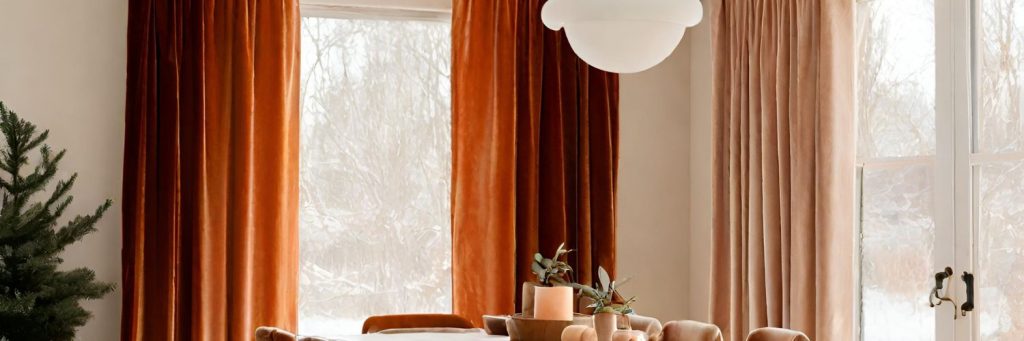
As the temperature outside dips, nothing beats the comfort of a warm and cozy home. Textiles play a pivotal role in transforming your space into a snug retreat during the winter months. This article, part of the Winter Decor Guide Series, will guide you through the art of using textiles to add warmth, texture, and a sense of comfort to your home.
Layering for Warmth and Texture

Layering is a key concept when it comes to using textiles in winter decor. Start with a base layer, like a soft area rug, and build up with throws, cushions, and heavy drapes. This not only adds visual depth to your space but also physical warmth. Think of layering as creating a textile landscape in each room, with each layer contributing to the overall warmth and texture.
Choosing the Right Fabrics

When it comes to winter textiles, the thicker and softer, the better. Materials like wool, fleece, cashmere, and faux fur are perfect for this season. They offer the warmth needed to combat the cold and add a luxurious feel to your decor. Use these fabrics in your blankets, throw pillows, and even upholstery to maximize comfort.
Throws: The Ultimate Cozy Accessory

A well-placed throw can transform any space into a cozy nook. Drape a chunky knit throw over the back of your sofa or at the foot of your bed for an inviting touch. Throws are not only functional but also a great way to add color and pattern to your decor, especially if you’re working with a more neutral color scheme.
Cushions: Comfort and Style Combined

Cushions are an easy and affordable way to incorporate cozy textiles into your decor. Mix and match different textures and sizes for an eclectic look, or choose a cohesive set for a more uniform appearance. They’re perfect for adding an extra layer of comfort to sofas, chairs, and beds.
Warm Window Treatments

Heavy curtains or drapes can add a significant amount of warmth to a room. They’re excellent for insulating windows against cold drafts and can transform the look and feel of a space. Opt for fabrics like velvet or heavyweight cotton in rich, warm hues to enhance the cozy factor.
Rugs: Foundation of a Cozy Room

Rugs are essential in creating a warm, inviting space, especially over hard flooring. A plush area rug not only adds warmth underfoot but also anchors your room, providing a base for your other textile elements. Consider layering rugs for extra coziness and a unique, textured look.
Seasonal Bedding for a Warm Retreat

Transform your bedroom into a winter sanctuary by switching to seasonal bedding. Flannel sheets, quilted bedspreads, and plush duvet covers are ideal for keeping you warm on cold nights. Layer with throws and extra pillows for added warmth and a decorative touch.
Caring for Your Textiles
To ensure your textiles stay fresh and last longer, proper care is essential. Follow cleaning instructions carefully, and consider storing seasonal items properly when not in use to maintain their quality and appearance.
Incorporating cozy textiles into your winter decor is more than just a stylistic choice; it’s about creating a space that invites relaxation and comfort during the coldest months. By thoughtfully selecting and layering textiles, you can turn your home into a warm, inviting haven, perfect for enjoying the winter season.
Embracing Minimalism | The Winter Decor Guide Series

In the heart of winter, our homes become our sanctuaries. This season, embrace the art of minimalism in your decor to create a peaceful, uncluttered space that reflects the simplicity and serenity of the season. This article, part of the Winter Decor Guide Series, will explore how you can incorporate minimalist principles into your home to create a tranquil winter haven.
A Palette Inspired by Winter

Start by choosing a color palette that mirrors the subtleties of the winter landscape. Think in terms of whites, soft greys, and pale blues – colors that evoke a sense of calm and mimic the hues of a snowy day. This limited color palette not only soothes the eye but also creates a cohesive look throughout your space.
The Beauty of Empty Space

Minimalism is as much about the space you don’t fill as it is about the decor you choose. Embrace the idea of less is more by leaving some areas of your rooms intentionally empty. This creates a sense of openness and clarity, providing room for relaxation and contemplation during the bustling winter months.
Quality Over Quantity

In minimalist decor, each piece should be chosen with intention. Opt for a few well-made, beautiful items rather than a multitude of decorative objects. This could mean a single, striking piece of art on the wall, a well-crafted vase on a table, or a luxurious throw on the sofa. These items should not only be aesthetically pleasing but also functional, adding to the simplicity and practicality of the space.
Textural Contrast for Warmth

While a minimalist approach often favors a clean, sleek look, adding varied textures is essential to prevent the space from feeling cold or sterile. Incorporate different materials such as wool, cashmere, or chunky knits in your throws and cushions. These textures add depth and warmth, making the space more inviting during the cold winter months.
Lighting: Subtle and Soft

The right lighting is crucial in minimalist decor, especially during the short days of winter. Choose lighting that creates a soft, warm glow. Dimmer switches, floor lamps with warm bulbs, and candles can all contribute to a cozy yet minimalist environment. The idea is to mimic the gentle light of winter, creating a tranquil and restful ambiance.
Decluttering: The Heart of Minimalism

Take this opportunity to declutter your space. Removing unnecessary items not only clears physical space but also creates mental space, offering a sense of calm and order. Keep surfaces clean and organized, and choose storage solutions that are both functional and stylish.
Nature-Inspired Accents

Incorporate elements from nature to add life to your minimalist decor. A simple vase of winter branches, a few pinecones, or a minimalist wreath can bring an organic and refreshing touch to your rooms without overwhelming them.
Sustainability and Mindfulness
Embracing minimalism is also about being mindful of our environmental impact. Choose sustainable and eco-friendly materials where possible, and invest in pieces that are made to last. This approach not only aligns with the minimalist ethos but also contributes to a more sustainable lifestyle.
Minimalism in winter decor is all about creating a space that feels serene, cohesive, and intentional. By simplifying your space, you allow the quiet beauty of winter to take center stage, offering a respite from the chaos of the outside world. This winter, let your home be a reflection of simplicity and peace, a true minimalist retreat.
Bringing Nature Inside | The Winter Decor Guide Series

As the winter chill sets in and the landscape outside turns to a monochrome palette, bringing a touch of nature into our homes can transform them into warm, lively sanctuaries. This article, part of the Winter Decor Guide Series, will guide you through the art of integrating natural elements into your home decor, creating a serene and inviting space during the colder months.
Embrace the Beauty of Bare Branches

Winter is synonymous with the stark beauty of bare trees. Incorporate this aesthetic into your home by arranging bare branches in large vases or urns. These branches can be adorned with fairy lights or left in their natural state for a more minimalist look. They not only add a sculptural element to your space but also pay homage to the stark beauty of the season.
Pinecones: The Versatile Decor Item

Pinecones are a winter decor staple. Scatter them across your mantel, bundle them in a clear vase, or use them as part of a centerpiece. For a festive touch, paint them white, silver, or gold. They’re a symbol of the resilience of nature and bring an earthy, rustic feel to any room.
Evergreen Sprigs: A Touch of Perennial Green

In the heart of winter, evergreen sprigs remind us of the enduring life within nature. Incorporate sprigs of pine, fir, or spruce into wreaths, garlands, or as part of your table settings. Their rich green hues offer a vibrant contrast to the often grey and white winter scenery outside, and their fresh scent invigorates the home.
Utilize Seasonal Flowers and Plants

Winter doesn’t mean the absence of flora. Plants like poinsettias, Christmas cacti, and amaryllis offer bright blooms and are synonymous with the season. For a more long-lasting option, consider incorporating dried flowers, which can bring both texture and color to your winter decor.
Create Natural Tablescapes

For your winter gatherings, create centerpieces using natural elements like wood slices, moss, and berries. Combine these with candles for a cozy and organic tablescape. Such arrangements are not only visually appealing but also bring an element of the outdoors to your dining experience.
Natural Textures for Coziness

Incorporate natural textures through materials like wood, stone, and clay. These materials can be introduced in the form of decorative bowls, picture frames, or even as part of your furniture. Their earthy tones and textures add warmth to the home, perfect for counteracting the cold outside.
Reflecting Nature Through Art

Artwork featuring winter landscapes, wildlife, or botanical prints can also bring a sense of the outdoors into your home. These pieces can act as focal points in a room and are a subtle nod to the beauty of the natural world in winter.
The Importance of Sustainability
As you bring natural elements into your home, consider sustainability. Use responsibly sourced materials and support local artisans where possible. This not only benefits the environment but also adds a story to your decor.
Incorporating nature into your winter decor not only beautifies your home but also connects you to the outdoors during a season when you might be spending more time inside. These natural touches are a celebration of the season and a reminder of the beauty and resilience of the natural world, even in the depths of winter.
Kitchen Design Trends to Help You Create a More Functional Home
Kitchen designs will build on the momentum created by last year’s trends, including an emphasis on storage, nature-inspired accents and upgraded technology in lighting, appliances and fixtures. This year’s designs complement the simple luxury of organic style, while increased functionality becomes the main goal of updates and upgrades. These six trends are all about helping your kitchen work your way, adding substance and style that’s sure to last for years.
1. Flexible lighting
As the kitchen continues to transform into a multifunctional space, lighting will play a key role. “Lighting controls, and the ability to adjust your light to the task at hand, is an important trend,” says Greg Martin, creative director of design at Kichler Lighting. “This could be as simple as the ability to dim light levels or as complex as app-controlled color temperature and light intensity.”
According to the 2022 Design Trends Report by the National Kitchen and Bath Association, app- and voice-controlled lighting will be as popular as traditional dimmers and motion-sensing lighting in the coming year.
Multiple sources of light are another significant feature for a space used for varied tasks, and Martin says adjustable sconces are especially hot for kitchens. Hardwired or plugged in, these fixtures can be installed how and where they’re needed, adding both illumination and style. For all fixtures, he continues to see strong trends toward black and gold finishes and notes that white light fixtures are beginning to gain popularity.
2. Walk-in pantries

Last year, kitchens burst with new cookbooks, small appliances and cans of food following changes in cooking and shopping habits caused by the COVID-19 pandemic. In its 2021 “What Home Buyers Really Want” report, the National Association of Homebuilders found walk-in pantries tied with double-basin sinks as the most desirable feature homebuyers look for in a kitchen.
Not content with simply finding a place for everything, homeowners look to add functionality to kitchen storage, too. “Working pantries,” which include areas like coffee centers or a place to store and use small appliances, come in at No. 5 on the NKBA trend list.
3. Sink workstations

Sinks will see major upgrades, and there are two styles vying for your attention. “The past has proven that spaces in our home must serve multiple functions, and your kitchen sink is no different,” says Caroline Danielson, director of showrooms at Ferguson Bath, Kitchen & Lighting Gallery.
The NAHB report identifies side-by-side double sinks as the most-wanted kitchen feature. According to Danielson, these sinks are popular because they allow for simultaneous tasks, like food prep and washing dishes. They also offer a variety of configurations, allowing the homeowner to select from various basin sizes and depths, as well as faucet location and mounting style.
“Instead of your average stainless under-mount sink, we are encouraging clients to choose workstation sinks,” says Ebony Stephenson, owner of Designs by Ebony. Workstation sinks feature a built-in ledge for accessories like colanders, dish racks, cutting boards and ice holders; and often multiple faucets for added productivity. Stephenson expects to see galley-style sinks (wider than a standard 36-inch sink base cabinet), which could be especially popular in larger renovations and new construction where countertops and cabinets are specified.
4. Rounded accents

Organic style quickly became a top decor style in 2021 and continues to influence kitchen design. Now, rounded accents are showing up as a complement to this nature-inspired aesthetic. “We expect that curves and organic shapes will be integrated more into kitchen spaces, promoting comfort, whimsy and natural elements,” says Katherine Cohen, manager of visual merchandising and photography at FLOR.
For a grand approach, Cohen suggests arched windows, doorways and ceiling treatments that structurally integrate swells and curves. On a smaller scale, look for accents like circular trays, scalloped backsplashes, seating with curved backs, and soft furnishings with rounded geometric and abstract patterns. Cohen also notes a trend toward pairing curved and wavy decor elements with each other, such as round tables with circular rugs or round cutting boards with curved earthenware serving pieces.
5. Modern wood finishes

Greens and blues will continue to dominate home design, and the kitchen is no exception. But according to the NKBA, white and wood tones will also be popular. Together, these hues are the foundation for today’s popular organic style. While the NKBA reports painted wood is still the most-popular cabinet choice, designers agree that wood grain, especially in light and medium tones, is gaining ground in the kitchen.
“I’m seeing a renewed love for wood kitchens. Not the country oak from the 1980s, but gorgeous, grained walnut or white oak,” says Kelly Finley, founder and principal designer at Joy Street Design. Finley says these warm woods balance the coldness often found in tile and stone countertops. And it’s not just wood tones; prominent wood grains and textures are finding a place in kitchen design as well.
6. Smart appliances

Tech-savvy appliances are moving into more and more kitchens for multiple reasons. First, many companies are simply updating and adding new features to their line of appliances to better align with today’s connected homes. Additionally, homeowners are willing to splurge, even if appliances are more expensive right now.
“Given the delays in receiving appliances, homeowners are opting to wait to get everything they want in the ‘perfect” appliance,” says Finley. Saving time by preheating before getting home, being alerted when timers are done no matter where you are, and the possibility of having appliances serviced without a technician are all reasons homeowners are getting excited about adding more tech functionality to their kitchens, says Finley.
© Meredith Operations Corporation. All rights reserved. Used with permission.
The post Kitchen Design Trends to Help You Create a More Functional Home appeared first on Better Homes and Gardens Real Estate Life.
Bias in the Mortgage Approval Process

Homeownership has historically been influenced by racial, ethnic and other prejudices. Even in the areas where it has improved, recent studies have characterized the reduction of racial inequality in housing generally as “slow, uneven and fragile.” In certain areas, there has been little to no improvement. Events such as the Great Recession of 2008 and the COVID-19 pandemic have diminished minority homeownership rates, particularly for Latino and Black communities. Other studies suggest LGBTQ+ communities also face challenges when it comes to accessing financing.
Despite the existence of laws that prohibit discrimination in the housing market, studies show that racial bias—particularly in the mortgage approval process—continues to entrench racial segregation and influence the racial wealth gap. This article explores some of the bias that exists in the mortgage lending industry.
Key takeaways
- Homeownership comprises nearly 30% of American household wealth, making mortgage lending a very important business.
- Mortgage approval refers to the actions connected to securing a home mortgage.
- Aggressive lending discrimination tactics have declined or ceased but racial bias in the lending process continues to entrench segregation and influence the racial wealth gap.
- Since the Fair Housing Act of 1968 became law, the housing gap between minorities and White families continues to grow, driven primarily by the effect of the 2008 Great Recession.
- Algorithmic lenders don’t entirely eliminate impermissible bias as considered under American law.
Forms of discrimination
For many families, their home is their single biggest asset, and can represent a significant proportion of their overall wealth. This is particularly the case for non-White and Hispanic families, whose houses can account for up to 40% of their overall wealth:
- Black families: $57,694, 41.2% of total wealth
- Hispanic families: $69,055, 37.9% of total wealth
- Asian or other families: $218,937, 30.7% of total wealth
- White, non-Hispanic families: $205,145, 22.8% of total wealth
Since most individuals can’t afford to purchase a home outright, they need to be approved for a loan. This approval process involves a series of steps that will help get them a mortgage. The lending industry is key for homeownership and is an industry that’s projected to grow. According to Freddie Mac, demand for housing is expected to grow even with the effects of the COVID-19 pandemic. In fact, the agency estimates home sales to reach 6.9 million in 2022 and 7 million in 2023, and mortgage origins to grow from $2.1 trillion in 2022 to $2.2 trillion the following year.
A comprehensive review of the evidence published by the Urban Institute in 1999 found that minority homeowners in the U.S. faced discrimination from mortgage lending institutions, which took two main forms:
- Differential treatment:This occurs when qualified minority homeowners are discouraged from taking a loan, denied a loan or are offered unfavorable loan terms because of their race or ethnicity.
- Disparate impact:This form of discrimination is present when minority loan seekers are disqualified at a higher rate than White loan seekers in a manner that cannot be justified as a business necessity, even when the reasons why this difference exists aren’t immediately obvious.
Direct denials of housing availability are the most naked forms of mortgage lending discrimination. The prevalence of direct denials has declined. Housing inequalities among racial groups have also declined, but the continued existence of inequalities points toward discrimination.
Mortgage discrimination and homeownership
The Fair Housing Act prohibits housing discrimination of any kind. The law was enacted in 1968 and outlawed housing discrimination based on race, religion, gender, family status, disability and ethnicity. The goal was to ensure access to housing, whether that’s through home purchases or rentals, to everyone.
Despite the law, homeownership rates for Black Americans are still disproportionate compared to those for White Americans. This suggests that discrimination may be ongoing and impacting minority homeownership rates. According to Alanna McCargo, former vice president for housing finance policy at the Urban Institute, there’s a large gap in homeownership for racial and ethnic homeowners that continues to grow. “We have not simply failed to make progress; we are losing ground. And we cannot continue to go backward.”
Over 74% of non-Hispanic White Americans are homeowners, as of the fourth quarter of 2021. Compare that to 43.1% of Black Americans and 57.6% of all other races, including Asian Americans, Native Hawaiians and Pacific Islanders, according to the St. Louis Fed.
Black and Hispanic consumers purchased homes during the peak of the housing bubble and were more likely to be offered subprime loans than White people and Asian Americans, even when they qualified for prime loans, according to McCargo, who also stated that their recovery rates were slower than those of White Americans.
McCargo published testimony in 2019 that described the racial and homeownership gaps in the U.S. as “worse than the gaps that existed when private race-based discrimination was legal.”
Disparate rejection rates and segregation
A 2020 meta-study from Northwestern University reported that racial discrimination persisted in mortgage lending. While most forms of discrimination in the housing market declined or ceased (including the most extreme forms, such as lying about the availability of advertised housing units), the authors of the study said that Black and Hispanic borrowers still face disproportionately high levels of rejection.
According to the study, racial gaps in loan denial decreased slightly between the 1970s and 2020, while gaps in mortgage costs remain for Black, Hispanic and Asian Americans. Discrimination like this entrenches racial segregation by pushing those with weak preferences to neighborhoods made up of residents with similar racial backgrounds. This only serves to fuel the racial wealth gap by making it harder for Black people to actually build wealth.
Other studies also corroborate this finding, including a 2019 LendingTree report, which indicated racial differences in lending rejection rates. According to that report, Black borrowers have the highest denial rates, at 17.4%, and non-Hispanic White borrowers have the lowest, at 7.9%.
LGTBQ+ couples also face discrimination by those in the mortgage lending industry. These couples faced 73% higher rates of loan rejection than heterosexual couples with similar applications. They also were more likely to be charged higher fees and higher interest rates.
Historical discrimination and laws
Discrimination has historically shaped the mortgage approval process in the U.S. Some experts characterize housing inequalities as the lingering hangover of historical inequalities.
The Federal Housing Administration encouraged White middle-class homeownership during the 20th century. But the practices it used, including redlining and restrictive covenants, denied members of minority groups access to federally subsidized housing and mortgage insurance.
As noted above, the Fair Housing Act made housing discrimination based on race, ethnicity and other factors illegal. A follow-up to the 1964 Civil Rights Act, the Fair Housing Act was signed in the days immediately after the assassination of Martin Luther King Jr., who became affiliated with the struggle for fair housing during the 1966 open housing marches in Chicago. According to some, the Fair Housing Act’s main objective was to “curtail discrimination in the housing sector.”
The Equal Credit Opportunity Act of 1974 broadened protections to include interactions with places that regularly extend credit, including banks and other institutions that offer home loans. It makes it illegal to discriminate because of race, color, religion, national origin, sex, marital status, age or use of public assistance.
Housing discrimination is illegal. If you think you’ve been discriminated against based on race, religion, sex, marital status, use of public assistance, national origin, disability or age, then there are steps you can take. One such step is to file a report with the Consumer Financial Protection Bureau or the Department of Housing and Urban Development.
Housing discrimination in the digital age
The rise in digital applications swept through the financial sector with increasing consumer demand for financial service accessibility, making changes to the way institutions do business. Digital mortgage platforms now make it easier for people to apply for and get approval for mortgage loans, but discrimination may persist.
A University of California, Berkeley study found that financial technology doesn’t completely remove bias. According to the findings, many algorithmic lenders show no discrimination in loan rejection rates. But while they reduce disparities in rejection rates, they do not eliminate “impermissible discrimination.” That’s because they may profile consumers for low-shopping behavior and those who operate in weaker competitive environments. They charged otherwise equivalent Latino and Black borrowers $765 million more per year for refinancing mortgages.
An investigation conducted by The Markup highlighted how lenders were turning down more people of color for mortgages compared to White applicants in 2019, even though they had the same financial backgrounds. Overall, minority borrowers were 40% to 80% more likely to be denied home loans compared to White consumers, even when algorithms are at play. The report also highlighted the costs associated with mortgage applications, which are often nonrefundable, as being another strike against those who aren’t approved.
Which act prohibited discrimination in housing?
The Fair Housing Act was passed in 1968, making it illegal to discriminate against anyone looking for housing based on their race, religion, national origin, gender, abilities and family status. The provisions of the FHA include discrimination related to the purchase, sale, rental and financing of homes, regardless of the type.
What are the warnings signs that my lender may have discriminated against me?
You may have been discriminated against if you were denied a mortgage even if you qualified for it, or if a lender made attempts to discourage you from applying or gave you a loan with less favorable terms and conditions. You may have also been discriminated against if your lender closed your account without a valid reason.
How do I file a discrimination complaint against a mortgage lender?
If you believe you’ve been discriminated against by a mortgage lender for any reason, you can file a complaint with the Consumer Financial Protection Bureau. You can file your complaint online or by calling the agency directly at 1-855-411-CFPB (2372). Some state governments also protect residents against other forms of discrimination, so be sure to check the appropriate website for more information.
The bottom line
Homeownership accounts for as much as 40% of the wealth of a typical household in the United States. This means the mortgage approval process could be a large hurdle on the road to wealth and stability.
McCargo’s testimony highlighted several changes that she said would improve the situation. Her recommendations included promoting an equitable housing finance system that is sensitive to the fact that members of minority groups are more likely to lack a credit history, as well as an expansion of credit access, an update of credit scoring systems and modernization of the FHA. McCargo also suggested improving down payment assistance programs, creating a “robust small-dollar mortgage market,” and outreach and counseling for renters and home-ready millennials, among other proposals.
© Dotdash Media. All rights reserved. Used with permission.
The post Bias in the Mortgage Approval Process appeared first on Better Homes and Gardens Real Estate Life.
15 Stealthy Ways to Fake an Entryway in a Tight Space
Coats, shoes, sunglasses and keys all deserve a spot near the door. And they each need a place to call home at the end of the day. Creating a drop zone inside the door can be tricky if your home doesn’t have a designated foyer or mudroom, but with the right storage strategies, a sliver of wall space is enough to contain these basics. Bonus: Pared-down storage keeps you from stowing more in your entryway than you actually need. Use these space-efficient strategies, including shelves, narrow tables and cute cubbies, to fake an entryway with style.
1. Wall-mounted entryway storage

Inspiration for these wall-mount containers came from outside: They’re window planter boxes. Mounted on an entry wall, they become clever catchalls that are more useful than shelves and durable for daily use. Bins now line the boxes to sort and organize items.
To maximize vertical space, first mount one for shoes low, just above the baseboard. Then hang a mirror at a comfortable height for a once-over. Center the other bin below the mirror. The space left is prime for hooks to hold pet gear or jackets.
2. DIY entryway storage

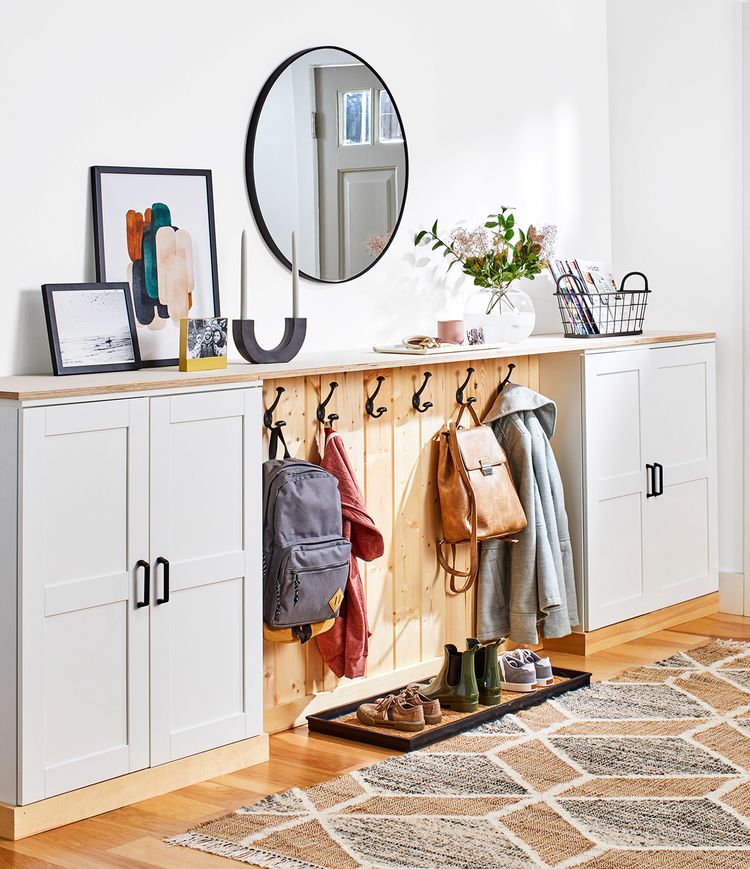
Assign closet duties to a wide section of wall and gain the benefits of a handy counter. Long and shallow, this DIY center of organization packs in the storage but stays out of the way. A three-piece plywood top spans a whopping 10 feet, bridging two 16-inch-deep cabinets and a row of coat hooks. The paneling is installed half as deep as the cabinets to keep the hooks within reach. Displaying artwork and accessories makes the unit seem like living room furniture. Birch boards wrap around the toe-kicks for a built-in effect.
3. Compact faux entryway

Convenience is key with this faux entryway. A wall-mount shelf with hooks holds keys, sunglasses and other rushing-out-the-door essentials, while a round mirror allows for last-minute checks. Be sure to use a shallow shelf, or you risk nicking the door each time it opens.
4. DIY mudroom

For busy families, organization is key to getting out the door on time. This DIY mudroom, created by hanging matching bookcases horizontally, offers individual storage compartments for each family member. Kid-accessible baskets and coat hooks hold shoes, backpacks and other everyday items. A cushion secured on top of the lower unit creates a comfy perch for putting on shoes.
5. Corner entryway

Tucked into a corner, this faux entryway is convenient but not in the way. A petite dresser provides hidden storage for keys, sunglasses, gloves and other accessories, while creating a display space for fresh flowers and decor. An umbrella stand keeps rain gear organized.
6. Entryway closet idea

A hyper-organized closet can double as an entryway. Hooks of varying heights hold jackets, backpacks and purses, while floating shelves keep shoes in check. Patterned wallpaper and a striped area rug give this closet personality and add depth. Plus, unlike an actual entryway, you can simply close the door when guests come over.
7. Kitchen entryway solution

If your door opens directly into the kitchen, add a freestanding island cart. This versatile furniture piece holds extra cookware and doubles as a prep or serving station. A simple hook tucked behind this kitchen door holds aprons, reusable grocery bags and purses. A large poster adds character to the makeshift entryway.
8. Entry console table

Carve out an entryway by placing a slim console table against a wall near the door. This inspiring entry, fashioned from an awkward half-wall, keeps it simple with a bright, jewel-tone table, fresh-cut flowers and a motivational poster. The upper half of the wall is coated in chalk paint to create a handy message board. A vintage bin tucked under the table organizes shoes, while a chevron rug catches dirt and debris.
9. Colorful faux entryway

Outfit an entryway table with colorful accessories for a fun pop of personality right inside the door. This intricately carved table topped with glossy orange lamps and turquoise knickknacks makes a splash against white walls. Stacks of books on the bottom shelf, which doubles as living room storage, add additional color.
10. Entryway pet storage

Keep all of the essentials for the family pet in one spot. Your furry friend will love curling up in his own corner, especially with his food and water bowl close by. Bountiful cabinet space holds extra food and toys, while wall hooks contain collars and leashes until it’s time for a walk.
11. Entryway bench idea

Park a bench inside your doorway for a fake entryway that’s both practical and pretty. The distressed finish on this wooden bench gives the piece character, while its location makes it easy for guests to take a seat and remove their shoes. Hanging hooks take the place of a traditional coatrack, and a basket beneath the bench organizes small items.
12. DIY entryway storage unit

Inspired by office file cabinets, these cubed units give everything a place. Assign kids their own cubbies to store school supplies or outdoor gear. On weeknights, have kids stock their storage container with everything they’ll need the next day. Attach wall-mounted organizers and hooks to the side to keep keys and mail organized.
13. Vintage entryway furniture

Old furniture is perfect for repurposing as entryway storage. A vintage desk, dresser or armoire near the front door collects everyday items and serves as a conversation piece. This particular piece evokes European elegance; painted vases and a gold-framed mirror enhance the look.
14. Staircase entry solution

When your home opens directly to a staircase, it can be difficult to find a spot for an entryway. In this case, a gilded dining room chair offers guests a spot to sit and take off their shoes, while a curved newel holds a purse. An area rug stops dirt from being tracked into the house.
15. Entryway mirror ideas

A mirror is a smart addition to a tiny entryway. This decorative accessory helps define the drop zone and, by reflecting light, makes the space appear larger. It also provides a handy way to check your reflection before heading out the door. Hang a mirror directly above a small dresser or table to fake an entryway in style.
© Meredith Operations Corporation. All rights reserved. Used with permission.
The post 15 Stealthy Ways to Fake an Entryway in a Tight Space appeared first on Better Homes and Gardens Real Estate Life.
High-Tech Facials For Your Next Spa Visit

Are you considering booking an appointment for a high-tech facial? You are not alone. Transformative treatments using cutting-edge technology promise long-term skin health. And spas are tempting with packages to regenerate, retexturize, and revitalize skin without the challenges associated with injectables and fillers. If you are intrigued by the possibilities, read on as we explore some of the most popular high-tech facial treatments available for your next spa visit.
High-Tech Retexturizing
If you live in New York City, or your travels are taking you there, you may want to book an appointment with Tracie Martyn. Celebrities swear by the spa’s signature high-tech facial packages to get ready for their close-ups. InStyle raves about their cutting-edge techniques, including “retexturizing microdermabrasion delivered via a diamond-tipped handpiece and her trademarked Beyond Microcurrent therapy, which revs production of adenosine triphosphate, an energy storing molecule that speeds healing and collagen production.” Finish the procedures with a “peptide-infused oxygen mist to lift.” You’ll see why Rihanna calls Tracie Martyn “the best.”
Hydrafacials
Hydration can significantly affect the look and feel of your skin. No wonder high-tech hydrafacials are grabbing attention. Dr. Purivsha Patel, board-certified dermatologist and founder of Visha Skincare, explains to Martha Stewart Living: “‘A [hydrafacial] is composed of exfoliation using a dermabrasion wand, cleansing using a water and suction wand, and treatment by delivering actives via serums directly onto the new skin beneath to increase penetration and absorption.’” The process can yield beautifully radiant skin that can last up to three weeks, making it a tempting option for anyone who wants to feel refreshed before a big event.
If you have particularly sensitive skin, you’ll want to be sure that your spa’s technicians have expertise in performing this unique dermabrasion to avoid irritating the skin excessively. Are you near Atlanta? TripSavvy confides that The Spa at Four Seasons Hotel Atlanta is one of the few spas in the Atlanta area that offers this high-tech procedure.
Intraceuticals Oxygen Facial
Upscale accommodations, a stunning locale, and an undeniably impressive spa are all aspects of Willow Lodge that keep guests returning year after year. TripSavvy adores this escape to “Woodinville’s wine country just 25 minutes from Seattle….” While this luxury resort is near tempting local wineries, it is the Willow Lodge spa that prompted the Magazine to name it among the best in Washington State. Their comprehensive menu of services combines an impressive list of traditional and high-tech treatments, including hydrafacials and intraceuticals oxygen facials. The Spa reveals: “[An intraceuticals oxygen facial] is the only treatment that uses oxygen under pressure to deliver a special serum of low molecular weight hyaluronic acid, essential vitamins, botanicals, antioxidants and peptides to the skin.” The process is said to promote “natural collagen and elastin production to improve skin texture and smooth the appearance of fine lines and wrinkles” after just one treatment.
Enhanced LED Facial
Because no two people have precisely the same needs, the scope of the Enhanced LED Facial, a signature treatment at Joanna Czech in Dallas and NYC, is fully customized and determined on the day of your visit. It’s an approach that is adored by clients and InStyle editors alike. The spa confides: “The treatment begins with sculpting and lifting manual massage, followed by exfoliation, extractions if necessary, and a combination of targeted serums chosen for your skin’s needs on that day. Afterwards, your esthetician will incorporate a combination of modalities, which may include various forms of microcurrent, ultrasound, cryotherapy, oxygen infusion, radio frequency, serums and/or masks.” This high-tech facial highlights an intriguing and targeted strategy for stimulating elastin and collagen. All sessions are completed with “an LED light infused with negative ions,” according to InStyle, with the color of the light determined by the client’s needs; “red for firming, yellow for pigmentation.”
Vitamin Sound Waves
If traditional peels aren’t delivering the desired results, Jordana Mattioli may have the solution. InStyle cheers that Mattioli has created a custom high-tech facial that truly wows. The Magazine reports: “Mattioli’s custom-tailored The Facial … may include the first-of-its-kind Ionzyme DF machine, which uses electrical currents and sound waves to transport large doses of vitamins into the skin, and CoolPeel from Environ, which can stay on the skin longer than traditional peels.” And if you have problem skin, the spa is also making waves using South Korea’s PlaSon device to promote clearer skin within just a few days.
Black Diamond Facials
The Spa at the Beverly Wilshire in Beverly Hills, California, has earned its reputation for creating a decadent experience while producing enviable results. TripSavvy raves: “Everything in the spa is luxurious from the white quartz crystal steam room’s heated benches and silky sheets to the dark chocolate snacks.” High-tech facial procedures abound; “Signature treatments including Celestial Black Diamond Non-Surgical Face Lifts and Cryotherapy Sports Massages utilize results-driven products and cutting edge tech including LED therapy, [Hydrafacial], and 111SKIN—a skincare system developed by a renowned cosmetic surgeon.”
Among the spa’s irresistible offerings is the Signature Facial by Beverly Wilshire. This 90-minute session begins at $995 and includes several high-tech treatments. You’ll start with the Hydrafacial and enjoy a microcurrent session to lift and firm while experiencing “galvanic technology [which] propels high-potent actives deep into the skin, minimizing lines, wrinkles, hyper-pigmentation and sensitivity,” according to the spa. Next, an oxygen infusion will help to restore elasticity, rebalance the skin, and repair damage before the final Knesko Luxury Diamond face, neck, and décolleté mask is applied. And voila – you are red carpet ready!
Visit Distinctive Collection by Better Homes and Gardens® Real Estate when you begin your journey to buy or sell your unique home.
The post High-Tech Facials For Your Next Spa Visit appeared first on BHGRE Distinctive Collection.